

Foreign Perspectives is a mix of free and paid content. Certain columns such as these are free for all subscribers, but other articles will be exclusive for paid subscribers. If you enjoy the work I do, please consider upgrading to a monthly or yearly subscription. Your support is greatly appreciated and ensures that this Substack can continue to deliver high quality pieces.
I am now just another statistic. Specifically, you can count me as part of the data point often cited which estimates that almost half of graduate students do not finish their Ph.Ds. Some may doubt that number, but given the state of academia these days and the limited long-term job prospects for those even with a degree, I’m inclined to believe that it’s closer to reality than not.
Earlier this year, I finally decided to drop out of my doctorate course at the Ritsumeikan Graduate School of International Relations. I had already known that I would be abandoning a career in academia since summer 2025 to look for greener pastures elsewhere. At the very least, though, I figured that I could finish the degree just to say that I had done it. After all, I successfully completed a master’s in IR and spent nearly half a decade toward a Ph.D. Why put all that to waste?
As it turns out, several factors outside of my control prevented me from completing my doctorate. The amount of years it would have taken to continue was not a realistic prospect given my age and future plans, so it was time to call a spade a spade. I’m now at a major crossroads as I begin the process of transitioning into the next stage of my life in starting a business while writing books on the side. I’ve been fortunate to have a life few foreigners in Japan get to experience, but my previous trajectory was simply not sustainable.
In this first entry of a three-part column series, I will chronicle what went wrong in my odyssey through academia and why I chose to move on. The second part will go into the difficulty of making international relations a full-time career, which is why I had to let it go. The third part will dive into why I left North Korean studies, a topic I spent over a decade following.
Why I wanted to be an academic

Having studied abroad in Japan from 2017 to 2018 in my third year of undergrad, I had to consider what my future would be after returning to the United States and graduating. I initially planned to do a dual-major in Japanese and Business, but the latter did not pan out because I couldn’t fulfill the math requirements beyond algebra. Business Calculus to this day remains the only course I’ve ever completely failed, and no amount of remediation could help me.1 That unfortunately cut me off from high-paying STEM fields, so I had to settle with a major in Japanese and a minor in English.
You’re free to make your jokes about useless humanities degrees — and I wouldn’t blame you — but I had some promising opportunities in front of me. I was fortunate enough to learn Japanese through the University of Pittsburgh’s East Asian Studies department, which is one of the best in America. I received multiple scholarships to take intensive summer language courses, work a summer internship in Yamaguchi Prefecture at a glass company, and do a homestay in Kobe, so the momentum for me to continue was there. I knew that I wanted to return to Japan and I was truly passionate about further education, so I believed that graduate school would allow me to fulfill both goals.
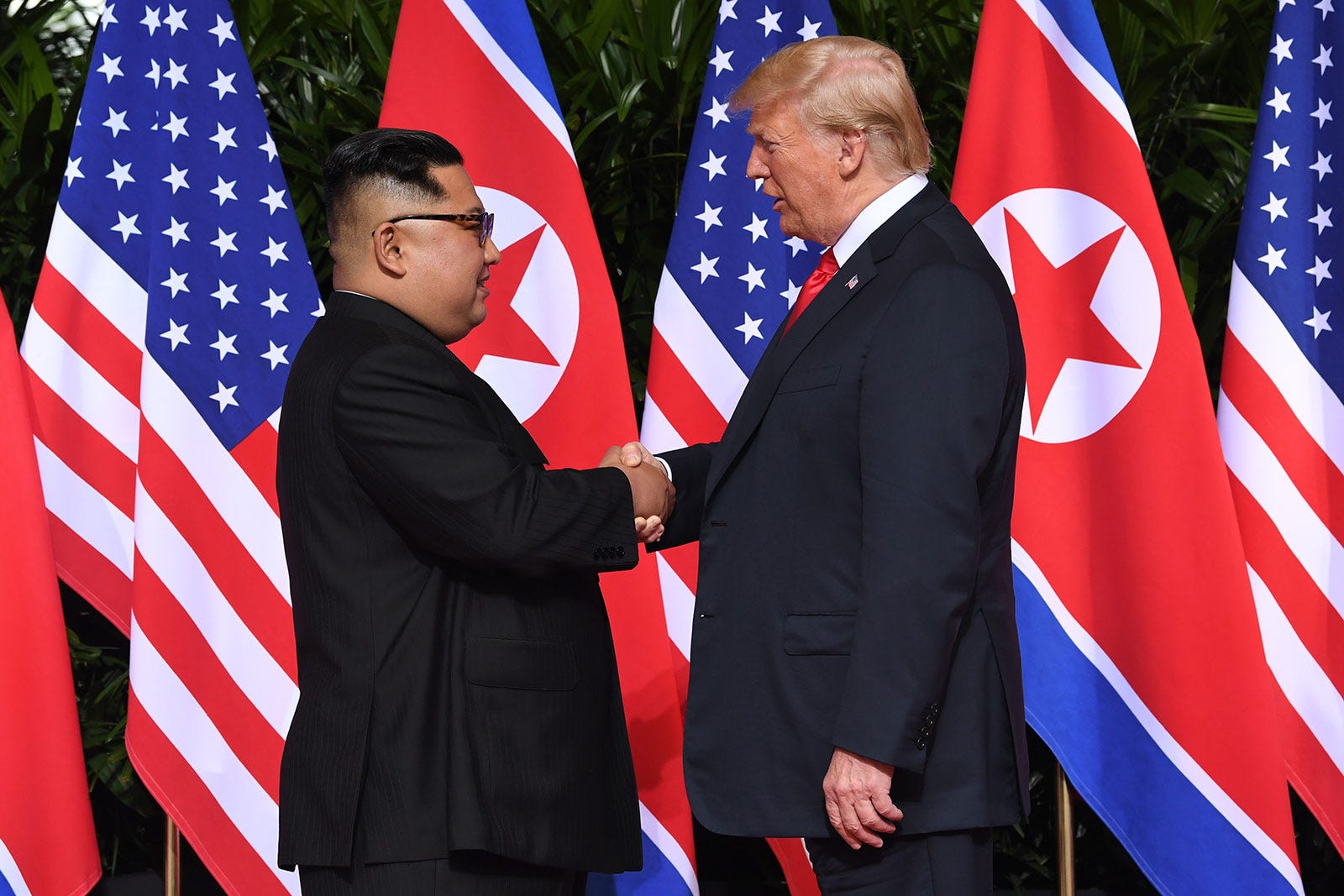
As cliched as it may sound, I became a graduate student because I wanted to pursue knowledge as a researcher and hopefully become an academic myself one day. International relations was the perfect field that aligned with my interests at the time. Japan is right in the center of important geopolitical events that unfold in East Asia, and regional tensions with North Korea were at a boiling point when I first moved to Japan in 2017. Given my Chinese family’s history of surviving the Cultural Revolution, I had an existing interest in the DPRK and its associated human rights issues. This was also when Donald Trump was engaging in his diplomacy with Kim Jong Un, while the tragic issue of Japanese nationals abducted by North Korea was the topic of my capstone thesis.
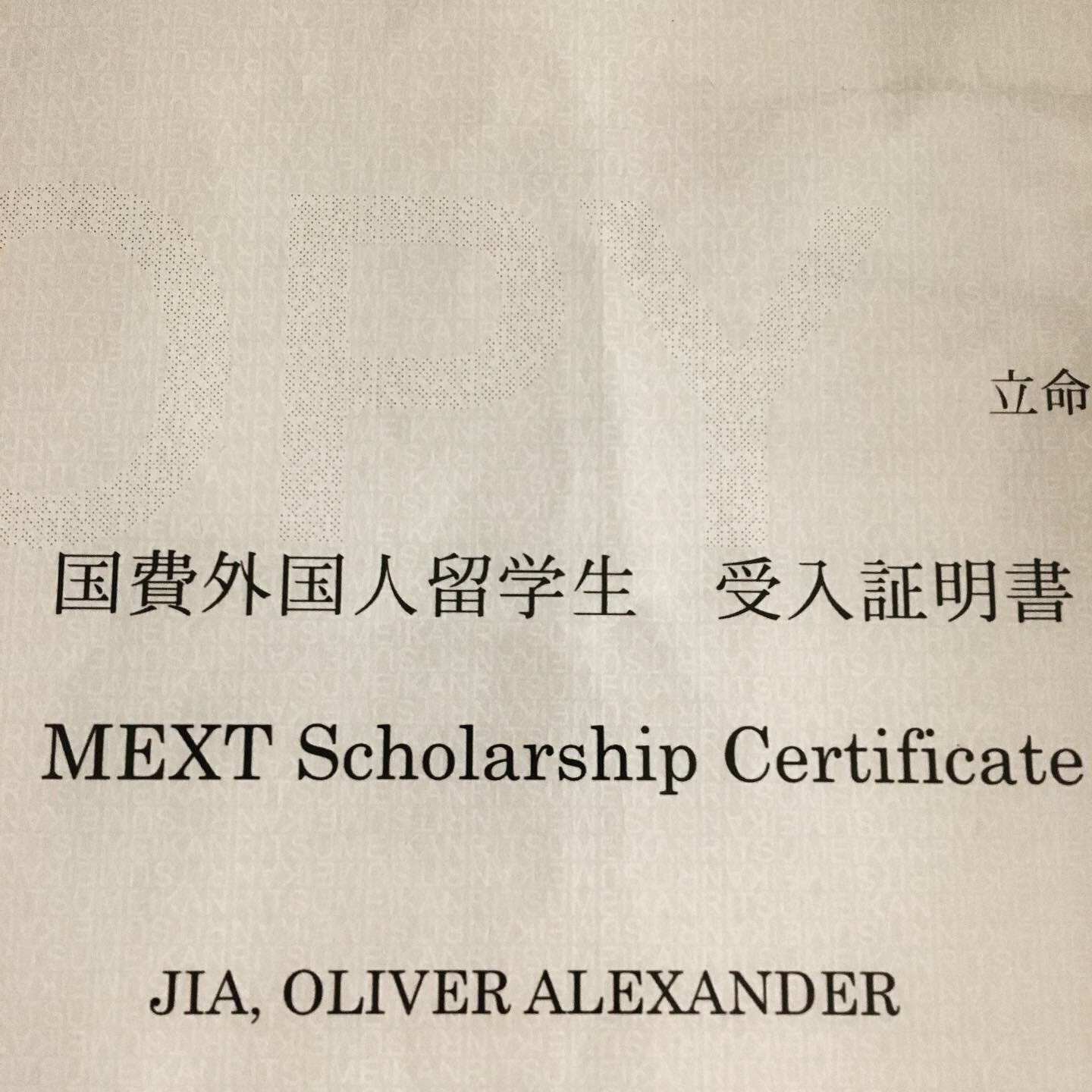
I discovered the MEXT scholarship, a grant provided by the Japanese government which waives tuition, includes a monthly stipend, and even includes a free plane ticket to Japan. This is one of the most competitive scholarships in the world, but against all odds I was somehow able to secure it to enroll in the international relations master’s program at Ritsumeikan University from fall 2019. The next two years taught me how to do research and think like an academic.
While undergoing my studies at Ritsumeikan, I became an employee of NK News, one of the most well-regarded outlets reporting the Korean Peninsula. With a completed master’s under the MEXT scholarship and a part-time job at a respected website directly related to my field, I could not have asked for anything better. If that wasn’t enough, I was able to make lightning strike twice by successfully re-applying for the MEXT scholarship to cover the next step of my journey: a Ph.D. Getting MEXT the first time around was a challenge, but being able to extend it another three years for a doctoral degree is something that almost never happens.
Part of me believes it was because 2021 was when Japan was still closed off to most would-be graduate students during the pandemic, but another part hopes that it was also because I submitted a strong application. Regardless, I was confident that I could continue building upon what I had accomplished during my master’s. By 2024, I would be Dr. Oliver Jia on his way to a teaching job! Or so I thought.
The publishing requirements got to me
While finishing my previous thesis was all I needed to graduate from my master’s program, Ritsumeikan’s requirements for receiving a doctoral degree are far stricter. In addition to the dissertation, you need a minimum of at least three academic publications. No problem, I thought. While working on my doctoral degree, I could easily hammer out these papers. I was already writing about North Korea for NK News and expanding my bylines as a freelance journalist to other outlets, so this would be a piece of cake.
And in the beginning, things seemed to be going ok. For my first academic paper, I decided to find a publisher for my master’s thesis. An analysis of the late Japanese Prime Minister Shinzo Abe administration’s policy toward North Korea, I edited it down into a concise paper for the journal North Korean Review. My submission was accepted and published in spring 2023. But if you’re keeping up with the timeline, you’ll notice that it took nearly two full years to go from finishing my master’s thesis to getting it published — nearly the same amount of time the actual master’s course itself took.
While that was somewhat of an extreme case, academic publishing is often a slow process. Undeterred, I immediately got to work writing my second article. I decided to focus on the Pyongyang Declaration, a historic agreement brokered between Japan and North Korea in 2002. I wanted to explain why despite initial hopes, diplomacy ultimately collapsed and how virtually all pieces of paper signed with the Kim regime suffer from the same problems. I even presented my article at a 2022 academic conference sponsored by North Korean Review in Seoul to good reception.
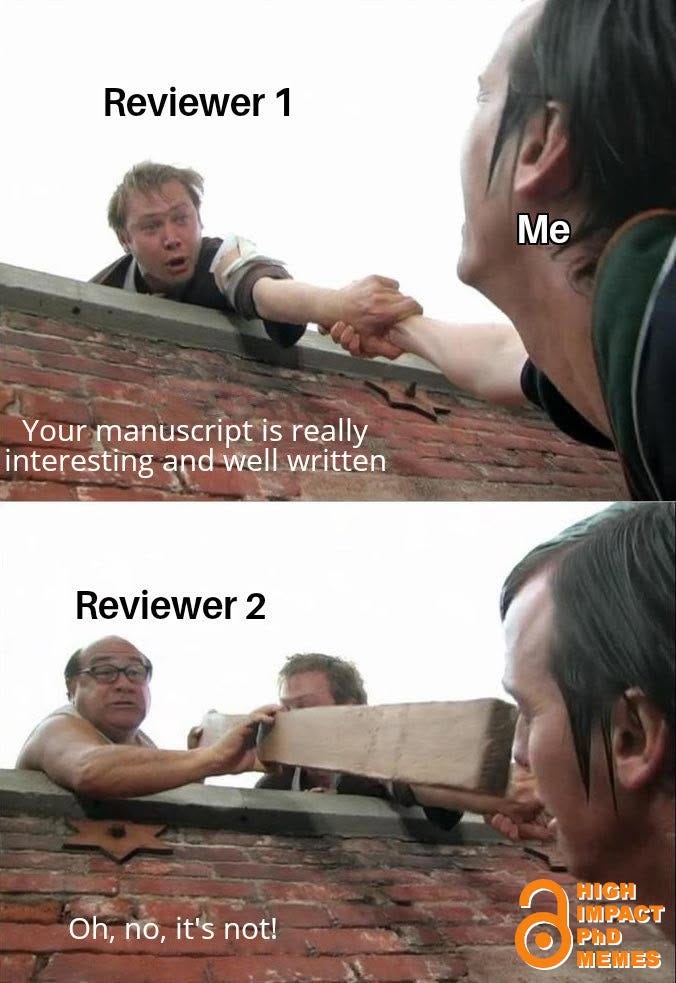
I must have easily gotten my paper published soon afterward, right? Nope. I spent the next four years pitching the article to publication after publication, including my university’s student journal. I was told that it didn’t offer a new contribution to the field of DPRK studies and that I lacked a solid theoretical framework. It was disappointing to hear, especially after I had spent so much time constantly re-editing the material. And remember, I still had to publish a third article on top of that. To make matters worse, I was informed by the department that my doctoral thesis wouldn’t even be looked at if I didn’t have all three papers published in advance.
This doctorate program, which was initially supposed to have lasted for three years, had gone on for nearly five years. While it is common for Ph.Ds to take longer than advertised, this was beyond the scholarship period MEXT offered. Tuition for additional semesters was thankfully low-cost enough for me to pay out of pocket after the scholarship period ended, but there was no way I could continue on any longer while waiting for academic publications to get back to me. Even if these extra papers were not an issue, my actual doctoral thesis was proving to be its own challenge as well.
Academic writing became the bane of my existence
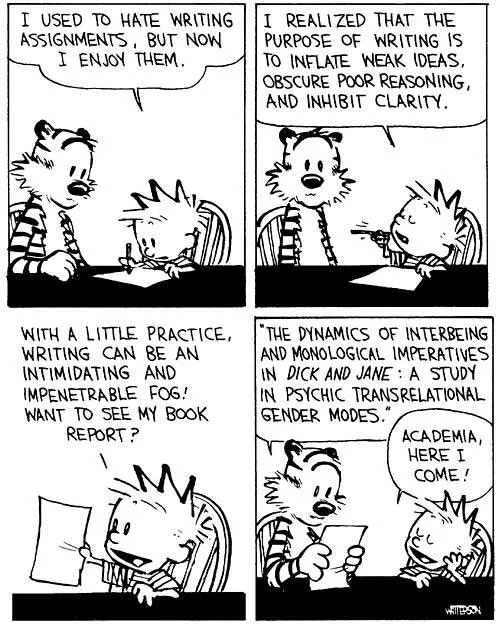
Have you ever heard of neoclassical realism? To put it in layman’s terms, it’s a school of thought in international relations which argues that leaders are constrained by domestic factors when deciding official foreign policy in response to external pressures. Straightforward, right? Now read how IR scholar Norman Ripsman describes it:
Neoclassical realism is an approach to foreign policy analysis that seeks to understand international politics by taking into account the nature of the international system—the political environment within which states interact. Taking neorealism as their point of departure, neoclassical realists argue that states respond in large part to the constraints and opportunities of the international system when they conduct their foreign and security policies, but that their responses are shaped by unit-level factors such as state–society relations, the nature of their domestic political regimes, strategic culture, and leader perceptions. Neoclassical realists have identified a number of important limitations to the neorealist model—for example, states do not always perceive systemic stimuli correctly, or the international system does not always present clear signals about threats and opportunities.
Are you still awake? Believe it or not, that wall of text is actually just three sentences and it’s only half of what’s supposed to be a brief abstract. Welcome to the world of academic writing! Ripsman isn’t even considered a particularly dense or complicated scholar and his work is usually on entry-level syllabi for new students of international relations. But the deeper into the weeds you get with such theories, the harder it becomes to keep up. If you found your concentration trailing off while trying to read up on neoclassical realism, congratulations. You’ve realized in five seconds what it took nearly five years for me to admit: academic writing is an abomination.
Non-academic outsiders often chalk this up to academics trying to sound fancy to hide weak ideas. On the other hand, some academics themselves may argue that their fields are too complicated for anything but convoluted language to suffice. There is a grain of truth to both claims, but the reality is more nuanced. As Steven Pinker wrote in his 2014 essay, “Why Academics Stink at Writing,” the real root cause is that those who have mastered a topic often forget the perspectives of people who don’t share the same level of knowledge.
International relations occupies a weird gray zone between the humanities and social sciences. It is technically part of the latter with economics and sociology, but it often touches upon history, literature, and philosophy. With that said, it is still heavily theory-based. I would be here all day if I tried to describe every IR theory from liberalism to the different types of realism, but every student in this field will inevitably encounter them. While some IR scholars care more about theory than others, academic publishers and reviewers will often be less than enthused if you don’t provide some kind of framework that references the accepted literature.
My doctoral thesis intended to cover the complicated relations between Japan and South Korea and their contrasting responses to mutual threats from North Korea. The research question analyzed this contradiction: Why do both countries not show full cooperation despite being democratic societies allied with the United States who all have a common enemy in the Kim regime? The obvious reason is their long-standing historical issues, but I wanted to explore what conditions created unavoidable tensions and what conditions allowed for solidarity to appear. I needed a theoretical framework as a mechanism for the thesis, so this is where the domestic pressures as outlined in neoclassical realism were most obvious to me.2
However, this is where the practical side of my dissertation began conflicting with the theoretical portion. As a journalist who previously tried to make a complex topic like the history of Japan and the Koreas as understandable as possible to the public, I don’t think you “need” a theory like neoclassical realism to explain geopolitics. If anything, it just makes things even more obscure to the average person. My editors for the outlets I wrote for would eliminate as much needless jargon as possible, but my advising professors insisted I show a robust understanding and application of IR theory.
To the best of my ability, I aimed to incorporate neoclassical realism with my research and the case studies I chose. I even tried to utilize the theory with that paper on the Pyongyang Declaration I spent literal years submitting to academic journals. Yet I was told that my attempted use of the theory was inadequate even after multiple revisions. And fair enough, perhaps it was. At the same time, it also made me realize that my writing is really that of a journalist or columnist who produces work for as wide of a readership as possible instead of a circle of academics obsessed with theoretical paradigms. The idea of trying to force myself to write like an academic for the rest of my life was the equivalent of asking me to eat glass as my only source of food.
Academics live in a brutally competitive world. As was demonstrated in my experience, the publish or perish model is the only way anyone can get ahead when there are more Ph.Ds than available jobs. You need to sound like you know what you’re talking about, especially when it comes to something as abstract as theory. This leads to an extremely self-conscious mentality where no one wants to come across as lacking in knowledge compared to the next guy. If the way I described neoclassical realism wasn’t good enough for a handful of reviewers looking at a short paper, that gave me little confidence that my doctoral dissertation of well over 70,000 words would be accepted.3
Facing the music
With publication requirements I would never meet, academic writing I couldn’t stand, and the prior knowledge that nothing I was doing would lead to a career anyways, I realistically had no other choice but to call it quits. My bylines as a journalist also didn’t mean anything here, either. In fact, most academics inevitably look down on “non-academic” sources. I was once told by a professor a couple of years ago that I couldn’t use Max Hastings, the author of one of the most acclaimed books on the Korean War, as a source on the Korean War. In retrospect, I should have realized then that I didn’t belong in this world.
Still, I can’t say that everything I did was a complete waste of time. Graduate school had been my entry back into Japan and it gave me a springboard to network with other people. I earned a scholarship to study what I genuinely cared about. Knowing how to do proper research is a skill I use in other aspects of my life. I met some incredible people along the way and made a few friends. Ritsumeikan is a well-regarded school, so having a master’s from there gives me some clout when I submit my CV. Many Japanese employers care more about the school you went to than what you studied. I suppose that isn’t nothing. And if I had never moved to Kyoto, I would have never met my wife. That alone is the biggest reason why I don’t regret the entire experience.
I should also emphasize that just because academia didn’t work out for me, that doesn’t mean it won’t work out for you. If you’re someone who has the fortitude to master the lingo, enjoys studying theory, and can figure out how to get multiple publications to build your credentials, then you’ll probably have much more success than I did. It saddens me that my path with postgraduate education had to end here, but I now have to reposition my life toward something that can actually provide a living.
In the next part of this column series, I will go into more detail on why international relations unfortunately did not pan out as a career, Ph.D or not.
Foreign Perspectives is a reader-supported Substack. If you like my work and have come this far, consider opting for a paid subscription so I can continue writing in-depth articles such as these on a regular basis. Your support is greatly appreciated!
I’m aware that there’s a ton of irony in me abandoning a business degree, only to start a business a decade later. But luckily, you don’t need to be well-versed in calculus to understand how Excel sheets work and people who are far better with numbers than I am have been helping me. LLMs have streamlined everything even further, in what’s probably one of the few legitimately great uses of AI. Though it’s not like most business professionals were actually computing derivatives by hand to begin with.
My doctoral thesis on Japan-South Korea relations and how they relate to North Korea will likely remain forever unfinished on my hard drive. Still, the overall outline was completed, the sources were gathered, and the first draft was about 60% done. I may rework that material into an article for my readers here or for one of the outlets I’ve previously contributed to. Minus the theory mumbo jumbo, of course.
I should also add that each reviewer of this paper gave me contradictory feedback. Some told me it was acceptable for publication. Others told me that it needed considerable revision, but then refused to explain what was lacking after I resubmitted in accordance to their instructions. “Reviewer 2” in the world of academic publishing is even a studied meme.
Spot on with the critiques here. Academic publishing is annoying and tedious. The writing is often terrible. And Im saying this as an academic…
There are definitely other pathways from international relations, including political risk and security consulting, among others. I wish you all the best, I think it's always good to be able to know when to cut things off (sunk cost fallacy being all too easy to fall into).